
Switzerland is adopting HL7 FHIR. heyPatient has done so from day one

Updated: May 21
Why sustainable digitalization requires an architecture designed from the start for interoperability and patient centricity
With the official recommendation of HL7 FHIR as the standard for the Swiss Health Data Space (SwissHDS), Switzerland is sending a clear signal for the future of digital healthcare.

The strategic direction is now set: interoperability is becoming the foundation of modern healthcare delivery.
For hospitals and clinics, the question is no longer whether interoperable platforms are necessary — but how sustainable and patient-centric today’s architectural decisions truly are.
Today’s architectural decisions define tomorrow’s ability to act
Healthcare institutions are under increasing pressure: regulatory requirements, complex system landscapes, growing integration efforts and limited internal resources.
The real challenge is therefore not digitalization alone, but sustainable operational capability.
Digital solutions only create long-term value if they are interoperable, scalable and able to support ongoing regulatory evolution.
This is exactly why the national recommendation for HL7 FHIR matters so much.
FHIR creates a common, internationally established language for secure healthcare data exchange. Systems, platforms and providers can therefore communicate and integrate far more easily.
This reduces complexity, integration effort and dependency on proprietary solutions — while creating the foundation for sustainable digital healthcare architectures.
Interoperability alone is not enough
The next critical step is true patient centricity.
The future of healthcare is not just about better connected systems, but about better coordinated care pathways around people.
This is where modern platform architectures reveal their true potential: enabling seamless, secure and connected Continuum of Care models.
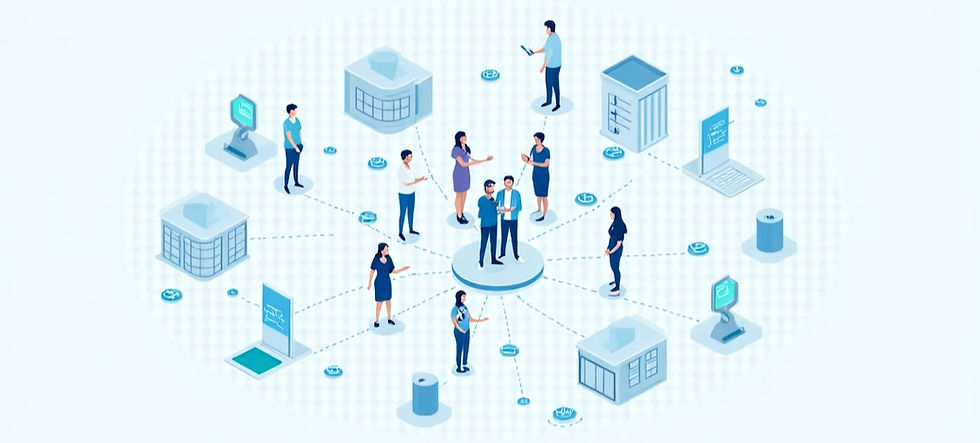
At heyPatient, this means placing the patient at the center of the platform architecture.
Through a unified Master Patient Index (the heyID) an institution-spanning patient view is created, regardless of which systems or providers are involved.
As a result, care pathways become better coordinated, patient journeys more seamless and care experiences more consistent.
Care works best together
Especially in chronic care, elderly care and complex care situations, the personal support network plays a crucial role.
That is why heyPatient intentionally integrates family members and caregivers through heyFamily into the digital care journey, in a simple, secure and patient-centric way.
The personal care network becomes an active part of the treatment pathway: supporting coordination, delegation and everyday care organization.
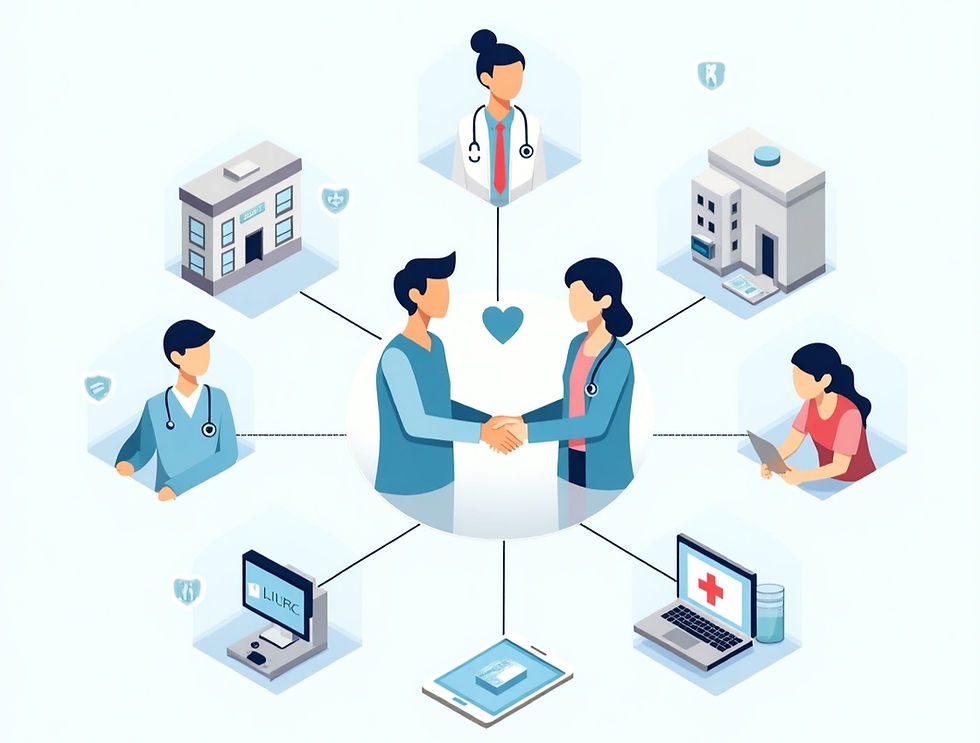
The result is not only better collaboration between healthcare professionals and relatives, but a digitally supported Continuum of Care centered around people.
A platform that connects not only systems, but people.
Why heyPatient has relied on HL7 FHIR from the very beginning
At heyPatient, FHIR is not simply an additional interface.
Our platform was designed as HL7 FHIR native from day one — as a deliberate strategic architectural decision.

Not as a reaction to current trends, but based on years of hands-on healthcare experience.
The experts behind heyPatient know the reality of hospitals and clinics firsthand: historically grown system landscapes, multiple applications and high integration complexity.
For us, interoperability was therefore never a “nice-to-have”, but a clear requirement from the start.
That is why heyPatient was built as a truly FHIR-native platform: open, flexible and built for long-term adaptability.
Not as an isolated portal solution, but as an interoperable platform connecting and extending existing healthcare ecosystems — without creating new silos or additional fragmentation.
Digitalization should be simple
Healthcare organizations no longer want additional integration projects or complex operational models.
They are looking for solutions that work reliably, reduce internal workload and remain sustainable over time.
This is exactly where the heyPatient as-a-Service model comes in.
Operations, security, maintenance, scalability and ongoing adaptation to new standards are delivered as a fully managed platform.
The result is a true “peace-of-mind” model for hospitals and clinics: less complexity, less coordination effort and more sustainable value for everyone involved.
The future is patient-centric and regionally connected
The FDMG recommendation clearly shows that Switzerland is moving toward a connected, interoperable healthcare ecosystem.
FHIR forms the foundation.
The next decisive step will be combining interoperability with patient centricity.
heyPatient was built precisely for this purpose: not as an isolated solution, but as a patient-centric platform for digitally connected healthcare regions.
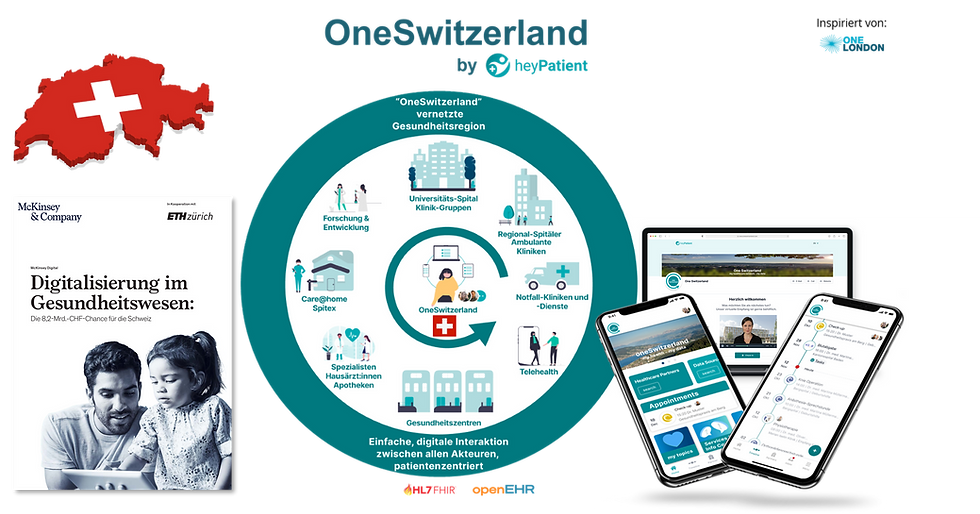
Healthcare professionals, patients and personal support networks are connected simply, securely and across institutional boundaries.
Just as healthcare truly happens in everyday life: connected, continuous and collaborative..
Don’t just connect systems. Rethink care.
The future of healthcare emerges where interoperability, patient centricity and sustainable operational capability come together.
That is exactly what heyPatient was built for.


Comments