
Digital Front Door – Yes we can.

Updated: Jul 3
The term Digital Front Door is becoming increasingly common in healthcare. We welcome that development because it perfectly reflects our vision. Because Healthcare Should Be Easy to Access, Digitally Too
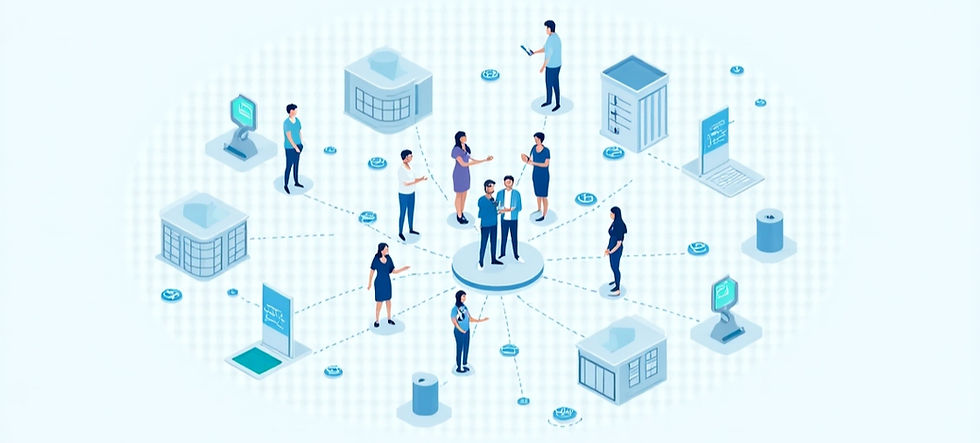
But what does a Digital Front Door actually mean?
What is a Digital Front Door?
A Digital Front Door is the digital entry point to modern, connected healthcare.
It gives patients easy access to information, services and healthcare providers while creating a seamless, personalised and integrated experience throughout the entire care journey.
In the short video below, The Medical Futurist Dr Bertalan Mesko explains the concept in just 60 seconds:

Why does it matter?
Digital services only create value when they are easy to access and intuitive to use.
Today, patients increasingly choose healthcare providers based on the quality of their digital experience. According to a study by NRC Health, 77% of patients begin their healthcare journey online. A well-designed Digital Front Door has therefore become a strategic advantage for engaging patients from their very first interaction.
Patient expectations continue to evolve.
What people already expect from banks, retailers and travel companies is now becoming the standard in healthcare: simplicity, accessibility and continuity.
What makes a successful Digital Front Door?
As the name suggests, a Digital Front Door provides one simple and intuitive entry point to all digital healthcare services.
It enables patients to:
quickly find relevant information,
communicate with their healthcare provider at any time,
manage appointments and admissions digitally,
receive personalised and automated information,
securely involve family members or caregivers whenever appropriate.
How do you design a Digital Front Door?
The answer is surprisingly simple.
Think about the entrance to a welcoming building. It is bright, inviting and easy to navigate.
A Digital Front Door should create exactly the same feeling.

Patients should immediately know where to go, what to do next and how to access the services they need.
What does this look like in practice?
Simple access from the very beginning
Registration and onboarding should be as effortless as possible.
The easier patients can get started, the more likely they are to use digital services throughout their care journey.
Designed around patients
An intuitive mobile-first experience.
Clear navigation.
Videos where they are more helpful than lengthy PDF documents.
Communication that is relevant, timely and easy to understand.
Valuable from day one
A Digital Front Door starts creating value before the first appointment.
Patients can:
discover available healthcare services,
prepare for appointments or admissions,
book appointments online,
receive personalised information,
easily find the right contact person.
The right level of security at the right time
Digital experiences should remain as frictionless as possible.
Strong authentication should only be required when patients access sensitive services, such as registration, appointment booking or admission.
Public information, healthcare services and contact details should remain easily accessible without unnecessary barriers.
This approach encourages adoption while ensuring the appropriate level of security whenever it is needed.
Conclusion
A Digital Front Door is not a one-time project.
It is the digital entry point to a seamless patient journey and evolves together with your organisation.
It simplifies access, strengthens digital engagement and creates the foundation for Continuity of Care.
What is your perspective?
How do you define a successful Digital Front Door?
Which elements are most important for your patients, healthcare professionals and organisation?


Comments